Polished Impressions: How Tampa's Hospitality Venues Are Leveraging Epoxy Flooring Across Every Square Foot
The hospitality industry operates under a simple but unforgiving premise: every physical detail of a guest's experience contributes to their overall perception of the property. Lighting, furniture, and décor receive considerable investment and attention. Flooring, by contrast, is often treated as an afterthought—until it becomes a liability.
In Tampa, where the hospitality sector encompasses everything from waterfront resort properties to high-volume restaurant groups, flooring decisions carry real operational and financial weight. Premier Epoxy Tampa has worked with properties across the Bay Area to install coating systems that address the full spectrum of hospitality flooring demands, and the outcomes speak to why this category of solution has gained significant traction in recent years.
The Scope of the Problem: Why Standard Flooring Falls Short
Hospitality environments subject their floors to stresses that most flooring materials were never designed to sustain simultaneously. Consider the demands placed on a mid-scale hotel property over the course of a single week: hundreds of guests rolling luggage across lobby surfaces, housekeeping staff moving carts through service corridors, kitchen crews navigating grease-laden back-of-house areas, and pool patrons tracking water across outdoor deck surfaces.
Ceramic tile, while common in commercial settings, develops grout lines that trap bacteria and are notoriously difficult to clean under industrial conditions. Polished concrete, though durable, lacks inherent slip resistance and requires periodic resealing to maintain its appearance. Vinyl composite tile is cost-effective to install but wears quickly under heavy rolling loads and is prone to edge lifting in humid environments.
Epoxy coating systems, by contrast, are engineered to address each of these shortcomings within a single, seamless surface. The absence of grout lines eliminates bacterial harboring. Topcoat formulations with anti-slip aggregates provide measurable, OSHA-recognized traction values. And the density of a properly cured epoxy system resists the kind of surface degradation that sends other flooring materials to the dumpster within five years.
Front-of-House Applications: Where Aesthetics and Durability Converge
Guest-facing spaces—lobbies, corridors, dining rooms, and event halls—demand flooring that performs without drawing attention to itself. The floor should complement the property's design language, not undermine it.
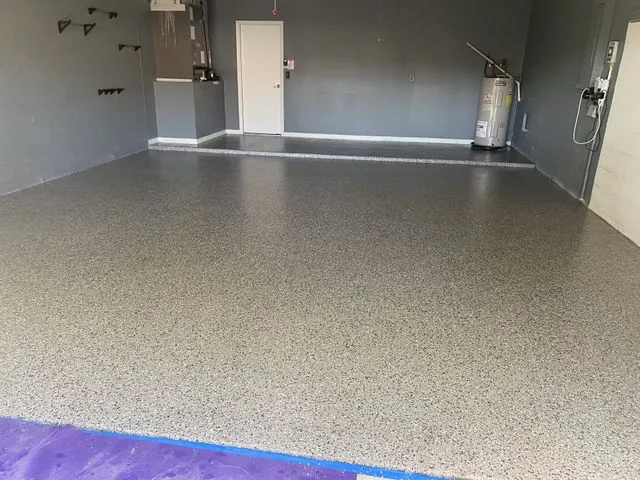
Modern epoxy systems have evolved considerably in their aesthetic range. Decorative quartz broadcast systems create surfaces that closely resemble natural stone at a fraction of the material and installation cost. Metallic epoxy applications produce flowing, high-gloss finishes that serve as genuine design statements in upscale lobbies and restaurant dining areas. Custom color-matching capabilities allow hospitality designers to specify flooring that integrates precisely with a property's established palette.
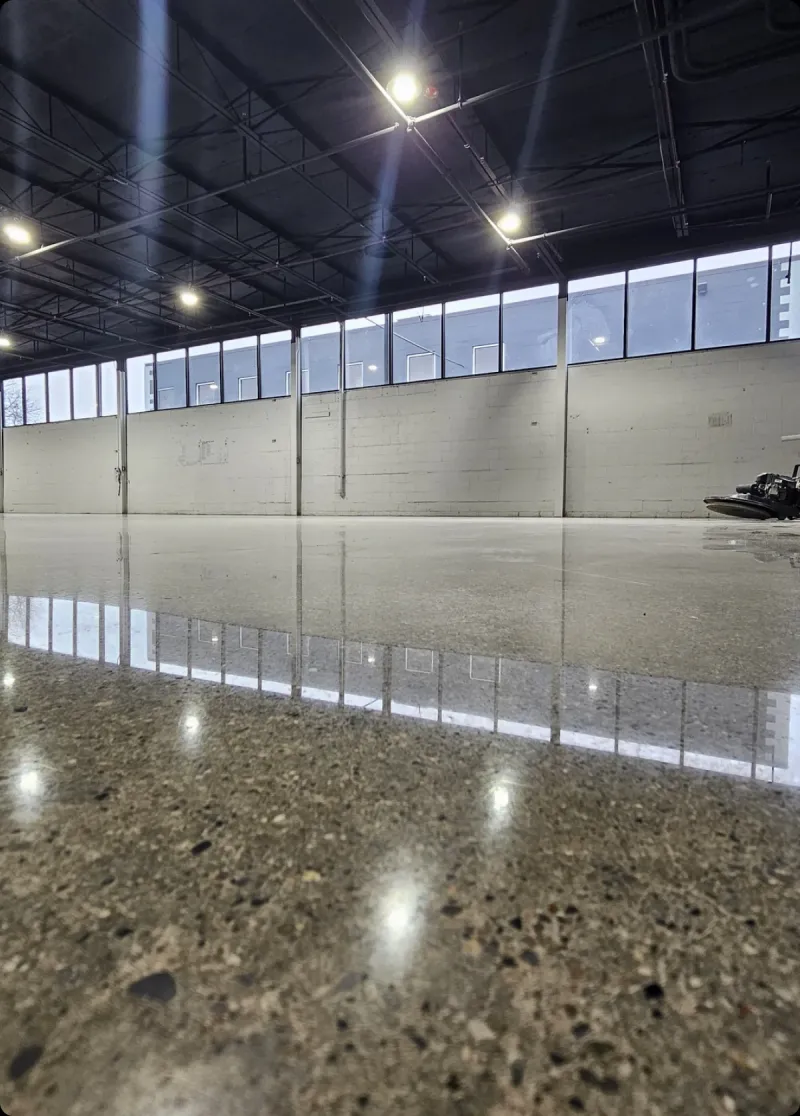
A Tampa boutique hotel that Premier Epoxy Tampa worked with recently opted for a large-format metallic system in their ground-floor lobby and corridor. The installation replaced aging terrazzo that had become cost-prohibitive to restore. The result was a seamless, high-gloss surface that reduced ambient lighting requirements—a consequential energy consideration—while dramatically elevating the arrival experience for guests.
Back-of-House Spaces: Where Performance Outweighs Presentation
Beyond the spaces guests occupy, hospitality properties contain extensive back-of-house infrastructure: commercial kitchens, laundry facilities, loading docks, storage areas, and mechanical rooms. These environments demand flooring that prioritizes function absolutely.
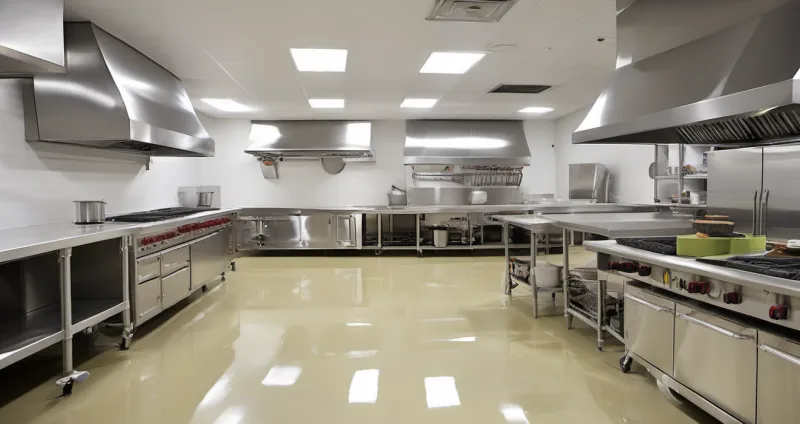
In commercial kitchen settings, flooring must comply with local health department requirements, resist thermal shock from steam cleaning equipment, and provide reliable traction even when wet or coated with cooking oils. High-build epoxy systems with broadcast anti-slip aggregates satisfy all three requirements while creating a seamless surface that is straightforward to sanitize.
Loading docks and service corridors present different challenges: heavy rolling loads from delivery equipment, forklift traffic in larger properties, and exposure to outdoor elements at transition points. Industrial-grade epoxy and polyurea hybrid systems are well-suited to these conditions, offering impact resistance and chemical tolerance that standard flooring materials cannot match.
For a Tampa restaurant group operating multiple locations, the operational benefit of consistent back-of-house flooring across properties is also worth noting. Standardized epoxy systems simplify maintenance protocols, reduce training requirements for cleaning staff, and ensure that health inspection outcomes are not influenced by flooring condition.
Pool Decks and Outdoor Areas: A Critical Safety Consideration
Pool decks represent one of the highest-liability flooring environments in the hospitality sector. The combination of water, bare feet, and hard surfaces creates conditions where slip-and-fall incidents are a persistent risk—and in Florida, where outdoor pool use is year-round, the exposure is continuous.
Epoxy and polyaspartic coating systems formulated for exterior use provide pool deck surfaces with controlled slip resistance values that can be specified to meet or exceed OSHA and ADA guidelines. Unlike painted concrete, which fades and peels under UV exposure and repeated wet-dry cycling, UV-stable coating systems maintain both their appearance and their traction properties over extended service lives.
Beyond safety, coated pool decks are meaningfully easier to maintain. Algae, mold, and mineral deposits—all common in Tampa's humid climate—release more readily from sealed surfaces and are less likely to cause permanent staining.
Maintenance Efficiency: An Operational Advantage
For any hospitality operator, labor costs associated with floor maintenance are a recurring budget line. Surfaces that require frequent stripping, waxing, resealing, or grout cleaning consume housekeeping hours that could be allocated elsewhere.
Seamless epoxy systems reduce maintenance complexity significantly. Routine care typically consists of sweeping and wet mopping with a pH-neutral cleaner. There are no grout lines to scrub, no wax layers to strip, and no seams where moisture can infiltrate and cause subsurface damage. In high-traffic areas that previously required nightly intensive cleaning, properties have reported measurable reductions in labor time following epoxy installation.
Evaluating the Investment
Commercial epoxy installations in hospitality settings are priced according to the complexity of the system, the square footage involved, and the specific performance requirements of each area. Properties should anticipate a higher per-square-foot cost than residential applications, reflecting the more demanding specifications and the scale of surface preparation typically required in commercial environments.
The appropriate frame of reference for evaluating that cost is not the price of the cheapest available alternative—it is the total cost of ownership over a ten-to-fifteen-year horizon, including maintenance labor, periodic refinishing, and the operational disruption of premature flooring replacement. By that measure, professionally installed epoxy systems consistently demonstrate favorable economics.
A Foundation Worth Investing In
In an industry where guest expectations are high and competitive differentiation is difficult to sustain, the quality of a property's physical infrastructure matters more than it might appear. Flooring that looks exceptional, performs reliably, and supports efficient operations is not a luxury—it is a sound operational decision.
Premier Epoxy Tampa works with hospitality clients throughout the Tampa Bay region to specify and install coating systems tailored to the precise demands of each space. From the lobby to the loading dock, we bring the same standard of technical execution and attention to detail that the industry requires. We welcome inquiries from property managers, owners, and facility directors who are evaluating their flooring options.