Beneath the Surface: How Epoxy Coatings Are Solving Tampa's Basement Moisture Crisis
Tampa earns its reputation as one of the wettest metropolitan areas in the continental United States. With an average annual rainfall exceeding 46 inches and relative humidity that rarely dips below 70 percent, the region's soil remains perpetually saturated for much of the year. For homeowners with basement or below-grade spaces, that moisture doesn't simply sit outside—it migrates inward, and the first surface it encounters is typically a bare concrete floor.
The consequences of ignoring that reality are rarely immediate. Concrete is porous by nature, and moisture intrusion tends to be a slow, cumulative process. By the time visible damage appears—white mineral deposits on the slab surface, dark mold colonies creeping along the base of walls, or a persistent musty odor that no amount of ventilation can fully eliminate—the underlying problem has usually been developing for months or even years.
For Tampa homeowners, epoxy flooring has emerged as one of the most effective and durable responses to this challenge. Understanding why requires a closer look at both the science of moisture movement and the specific properties that make epoxy coatings uniquely suited to Florida's demanding environment.
Why Bare Concrete Fails in Florida's Climate
Concrete is often perceived as a solid, impermeable material, but that perception is misleading. At the microscopic level, concrete contains a network of capillary channels—tiny pathways formed during the curing process—through which water vapor and liquid moisture can travel. In a climate like Tampa's, where the soil beneath a slab is frequently saturated and ground-level humidity is consistently high, these capillaries become conduits for ongoing moisture intrusion.
This phenomenon, known as hydrostatic pressure or vapor transmission, is particularly pronounced in below-grade spaces. When the water table rises following heavy rainfall—a common occurrence in Hillsborough County—pressure builds beneath the slab and pushes moisture upward through the concrete. The result is a floor that is perpetually damp, even when no visible water is present.
The consequences extend well beyond aesthetics. Chronic moisture exposure compromises the structural integrity of the slab over time, encourages the growth of mold and mildew, and creates conditions that are inhospitable for stored belongings, finished walls, and any flooring material applied directly over the concrete. Standard paint, vinyl tile, and laminate flooring are particularly vulnerable, often peeling, buckling, or harboring mold within months of installation in a high-humidity basement environment.
Efflorescence: The Warning Sign Most Homeowners Overlook
One of the earliest visible indicators of moisture intrusion in a concrete basement floor is efflorescence—the chalky, white crystalline deposits that form when water carries dissolved salts through the concrete and deposits them on the surface as it evaporates. Many Tampa homeowners mistake this for a cosmetic nuisance and address it with a scrub brush and a coat of paint. That approach treats the symptom while leaving the underlying cause entirely unaddressed.
Untreated efflorescence signals that water is actively moving through the slab. Left unresolved, this continuous moisture migration accelerates the deterioration of the concrete itself, weakens adhesion for any surface coating, and creates the damp conditions that mold spores require to colonize. In a region where mold remediation costs can reach tens of thousands of dollars, the financial stakes of ignoring these early warning signs are considerable.
How Epoxy Creates a Functional Moisture Barrier
A professionally installed epoxy coating system does not simply sit on top of a concrete floor—it bonds chemically with the slab at the molecular level, filling the capillary channels that allow moisture to migrate upward. The result is a continuous, non-porous membrane that dramatically reduces vapor transmission and prevents the cycle of moisture intrusion that degrades both the concrete and anything placed on top of it.
The effectiveness of this barrier depends heavily on the installation process. Proper surface preparation is non-negotiable. Before any epoxy product is applied, the concrete must be mechanically ground or shot-blasted to open the surface profile and remove any existing coatings, sealers, or contaminants that would prevent proper adhesion. Moisture testing must also be conducted to quantify vapor emission rates, as excessively high moisture content in the slab can compromise the bond if not addressed with an appropriate primer or moisture-mitigating base coat.
At Premier Epoxy Tampa, this diagnostic phase is treated as foundational to every basement project. Applying a high-performance coating over an improperly prepared or excessively wet slab is a shortcut that invariably leads to delamination, bubbling, and premature failure—outcomes that cost homeowners far more to correct than a proper installation would have cost in the first place.
When the process is executed correctly, a multi-layer epoxy system—typically consisting of a moisture-tolerant primer, a mid-coat build layer, and a UV-stable polyaspartic or polyurethane topcoat—provides a durable, cleanable surface that actively resists the conditions that defeat every other flooring option in a Tampa basement.
Transforming Wasted Space Into Finished Square Footage
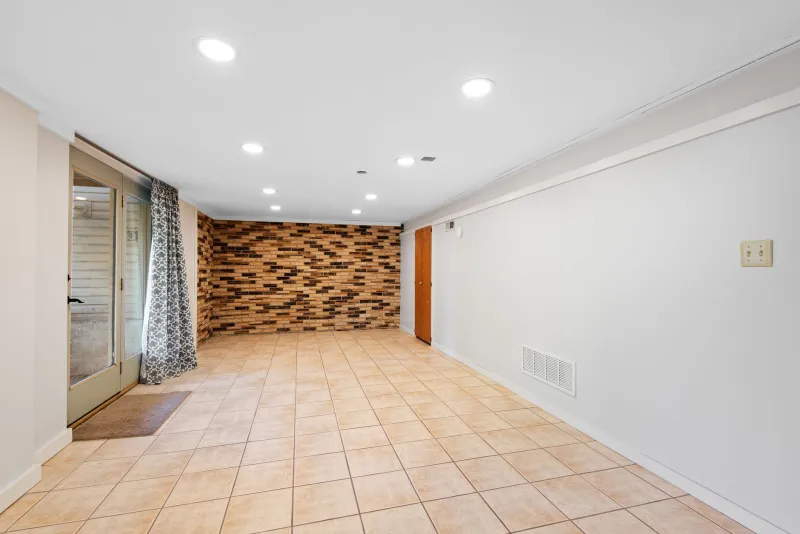
The practical benefits of epoxy in a basement environment extend well beyond moisture protection. Homeowners who have tolerated damp, uninviting below-grade spaces for years are often surprised by the degree to which a quality epoxy installation transforms the room's usability and perceived value.
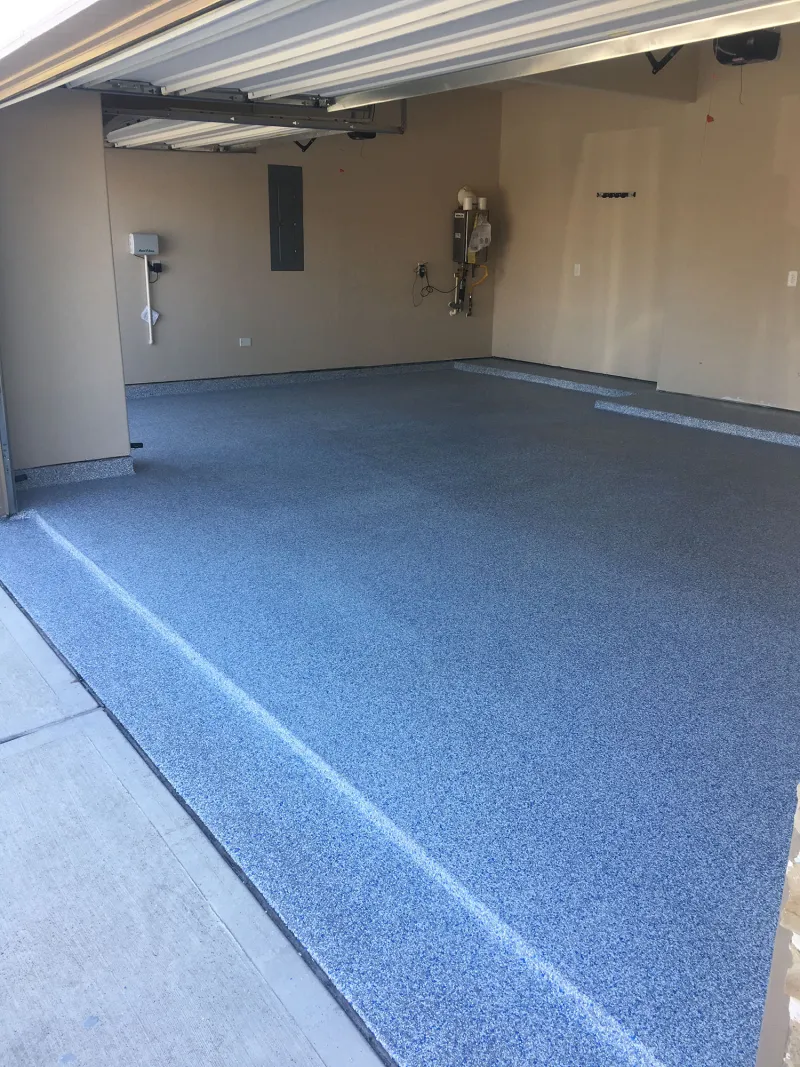
A finished epoxy floor eliminates the visual and functional barriers that prevent basements from serving as legitimate living areas. The surface is seamless, easy to clean, and available in a wide range of colors, finishes, and decorative options—including quartz broadcast systems and metallic epoxy designs that rival the aesthetic quality of far more expensive flooring materials. Combined with proper dehumidification and wall finishing, a basement with a professionally coated floor becomes a viable candidate for conversion into a home gym, workshop, media room, or additional living space.
From a real estate perspective, that conversion carries meaningful weight. In Tampa's competitive housing market, finished below-grade square footage—when properly executed—contributes to overall home value and distinguishes a property from comparable listings with unfinished or problematic basement spaces.
Selecting the Right System for Your Basement
Not all epoxy products perform equally in high-moisture environments, and the distinction matters considerably in Tampa. Water-based epoxy formulations, while widely available at retail home improvement stores, lack the film thickness and chemical resistance of commercial-grade, 100-percent-solids epoxy systems. They may provide a temporary improvement in appearance but are unlikely to maintain their integrity under sustained vapor pressure.
For below-grade applications in Florida, a professionally specified system should include a moisture-mitigating primer rated for elevated vapor emission levels, a build coat with sufficient mil thickness to create a genuine barrier, and a topcoat selected for both durability and ease of maintenance. The specific product selection should be informed by on-site moisture testing rather than assumptions based on the floor's visual condition.
Homeowners considering a basement epoxy installation in the Tampa area should request documentation of the contractor's moisture assessment process, product data sheets for all specified materials, and references from comparable below-grade projects completed in the region. These are the markers that distinguish a contractor capable of delivering a lasting result from one who is simply applying paint to a problem.
A Long-Term Investment in Protection and Livability
Tampa's climate is not going to moderate, and the physics of moisture migration through concrete are not going to change. What can change is the degree to which a homeowner's basement floor is prepared to withstand those realities. A properly installed epoxy coating system represents one of the most cost-effective interventions available—one that simultaneously addresses an active structural vulnerability and unlocks the potential of space that has likely been underutilized for years.
For homeowners who have grown accustomed to avoiding their basement or accepting its limitations as inevitable, that combination of protection and transformation is, quite simply, the floor solution the space has always deserved.