Five Years From Now: Why Two Epoxy Floors That Look Identical Today Will Tell Very Different Stories
The Problem with First Impressions
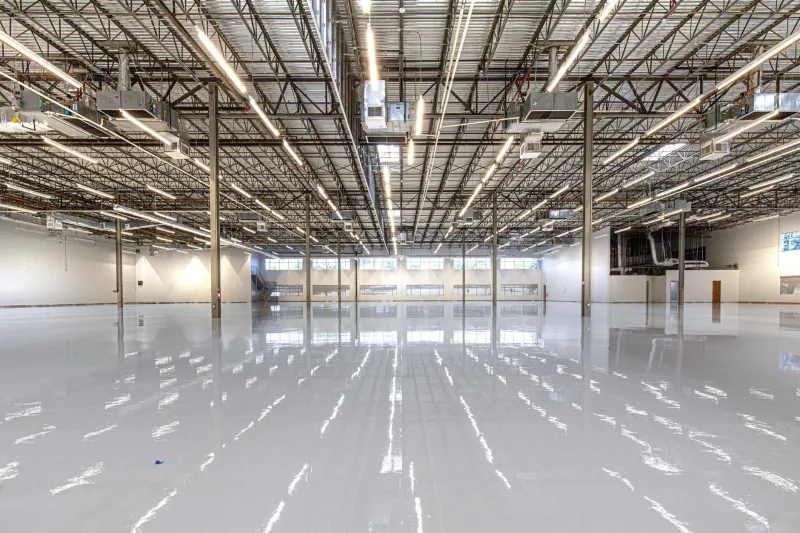
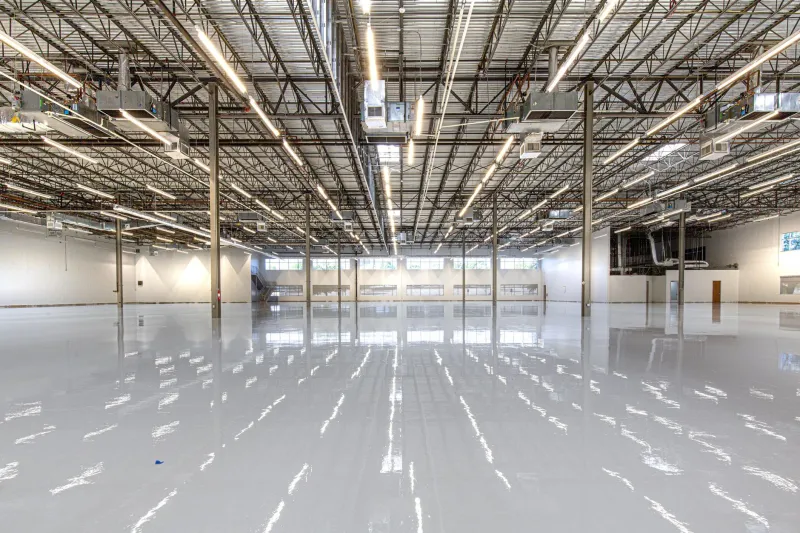
Walk into almost any Tampa garage, commercial kitchen, or retail showroom that had epoxy installed in the past year, and you will likely see a floor that looks polished, durable, and professionally finished. The sheen is present. The color is consistent. The surface feels solid underfoot. On that basis alone, it becomes genuinely difficult to distinguish a floor that will hold up for a decade from one that will begin showing its limitations within eighteen months.
This is what we call the epoxy illusion—the misleading visual parity between premium installations and budget alternatives during the early months of a floor's life. It is one of the most common sources of confusion among Tampa homeowners and business owners who are comparing contractor quotes, and it is precisely why price alone is such a poor indicator of long-term value.
The differences that determine longevity are not visible at installation. They are buried in material specifications, substrate preparation protocols, and the depth of experience a contractor brings to conditions that are specific to Florida's demanding environment.
What Budget Installations Typically Compromise
Contractors offering significantly lower bids are not performing magic. They are making trade-offs—some of which customers never learn about until the floor begins to fail.
Material solids content is among the first variables to suffer in budget applications. Epoxy coatings are measured in part by their percentage of solid material, which determines how much usable film thickness remains after the solvents evaporate. A product with 40 to 50 percent solids content will produce a meaningfully thinner cured layer than a product at 90 to 100 percent solids, even when applied at the same wet-film thickness. For Tampa floors that endure consistent foot traffic, vehicle loads, or chemical exposure, that difference in film build translates directly into how quickly the coating wears through to the concrete beneath.
Surface preparation shortcuts represent the second and arguably more consequential compromise. Proper concrete profiling—achieved through diamond grinding or shot blasting—opens the concrete's pore structure and creates the mechanical bond that anchors the epoxy system to the slab. When contractors skip or minimize this step to reduce labor costs and time on site, the epoxy adheres to the surface rather than into it. In Tampa's climate, where concrete slabs frequently experience moisture vapor transmission from the ground below, a shallow bond is particularly vulnerable. Delamination, bubbling, and peeling are the predictable outcomes, often appearing well within the first two years.
Coating system architecture is the third area where budget installations routinely fall short. A properly engineered epoxy system is not a single product applied in a single pass. It is a layered system: a penetrating primer or base coat formulated for adhesion, a body coat that provides thickness and chemical resistance, and a topcoat—often a polyurethane or polyaspartic—that provides UV stability and surface hardness. Collapsing this system into a single-product application, or substituting a water-based residential-grade product for a commercial-grade formulation, reduces the floor's capacity to handle the stresses it will face over time.
Tampa's Environment Makes These Differences Worse
The conditions that make Tampa a desirable place to live and operate a business are also conditions that accelerate the degradation of compromised epoxy installations.
High ambient humidity during application can interfere with epoxy's curing chemistry, introducing moisture into the film and creating a hazy, weakened surface that is prone to early failure. Experienced contractors monitor dew point and relative humidity before and during installation, adjusting their approach accordingly. Budget operators frequently do not.
Concrete slabs in Florida often carry elevated moisture vapor emission rates due to the state's high water table and minimal cold-season drying cycles. Without proper moisture testing and the application of a moisture-mitigating primer, vapor pressure can build beneath a cured epoxy film and physically push it away from the substrate. This is not a rare edge case in Tampa—it is a routine challenge that requires deliberate technical response.
UV exposure compounds the problem for any epoxy system that lacks a properly formulated topcoat. Standard epoxy resins are not inherently UV stable. Without a UV-resistant finish layer, the floor will begin to yellow and chalk within months of installation, particularly in spaces with natural light exposure.
What a Premium Installation Actually Looks Like at Year Five
A floor installed with the correct materials, proper surface preparation, and a complete coating system behaves very differently over time. The topcoat continues to resist scuffs and chemical spills without significant surface degradation. The color remains true rather than shifting toward yellow or gray. The bond between the epoxy system and the concrete slab stays intact even under thermal cycling and moisture pressure.
This is not theoretical. Tampa commercial facilities—auto dealerships, medical offices, restaurant kitchens, and multi-family properties—that invested in properly engineered epoxy systems five to ten years ago are largely still operating on those original floors without significant remediation. The maintenance they require is routine: periodic cleaning and, in high-traffic zones, an eventual topcoat refresh. They are not facing the prospect of full system removal and reinstallation.
Contrast that with the pattern we observe following budget installations. By year two, surface wear begins to expose primer layers. By year three, delamination zones appear near transitions and high-stress areas. By year five, the floor's appearance has degraded to the point where it reflects poorly on the business or home it occupies—and the remediation cost frequently exceeds what a premium installation would have cost at the outset.
How to Read a Quote Before You Commit
For Tampa homeowners and business owners evaluating epoxy proposals, the following questions provide meaningful insight into what a contractor is actually delivering:
- What is the solids content of the products being used, and can the contractor provide a technical data sheet?
- What surface preparation method will be used, and what concrete profile is the target?
- How many coats are included, and what is the role of each within the system?
- What topcoat is specified, and does it carry UV resistance ratings?
- Will moisture vapor emission testing be conducted prior to installation?
A contractor who answers these questions with specificity and documentation is operating at a different level than one who responds with vague assurances about quality and experience. The answers reveal whether the proposal reflects a genuine understanding of epoxy science or simply a willingness to apply product and collect payment.
The Transparency That Separates Long-Term Value from Short-Term Savings
At Premier Epoxy Tampa, we build our proposals around the technical requirements of each specific project—not around a price point that wins bids by sacrificing the details that matter most. That means conducting moisture assessments before specifying a system, using commercial-grade materials with documented solids content and film thickness ratings, and completing surface preparation to the profile that the system requires.
The floor your neighbor had installed last spring may look exactly like ours today. The difference will become apparent over the next several years—not through any dramatic failure event, but through the gradual accumulation of small compromises that were built into the installation from the beginning.
Choosing an epoxy floor is a long-term decision. The contractor you choose should be willing to help you understand exactly why their installation will hold up when others will not.