What's Underfoot Shapes What's Ahead: How Tampa Businesses Are Using Epoxy Floor Color to Direct Customer Behavior
When a customer steps through the front door of a Tampa business, they form an impression within seconds. Most owners invest heavily in signage, lighting, and product displays to control that impression—yet the floor, which occupies more unobstructed visual real estate than nearly any other surface in a room, is frequently treated as an afterthought. That calculation is changing.
Across Tampa's commercial landscape, a growing number of business owners are working with epoxy flooring contractors to make deliberate, research-informed color decisions. The results are measurable: longer dwell times in retail environments, reduced patient anxiety in clinical settings, and stronger brand recall in fitness facilities. Understanding why requires a brief look at what color actually does to the human brain—and what that means for the floors beneath your customers' feet.
The Science Behind Color and Human Response
Color psychology is not a marketing invention. It draws from decades of research in environmental psychology, neuroscience, and behavioral economics. The core finding is consistent: color stimulates physiological and emotional responses that influence decision-making, often below the threshold of conscious awareness.
Warm hues—reds, oranges, and yellows—activate the sympathetic nervous system, elevating heart rate and creating a sense of urgency or energy. Cool hues—blues, greens, and soft grays—have the opposite effect, lowering perceived stress and encouraging longer, more deliberate engagement with a space. Neutral tones, depending on their undertone and finish, can communicate cleanliness, sophistication, or industrial authority.
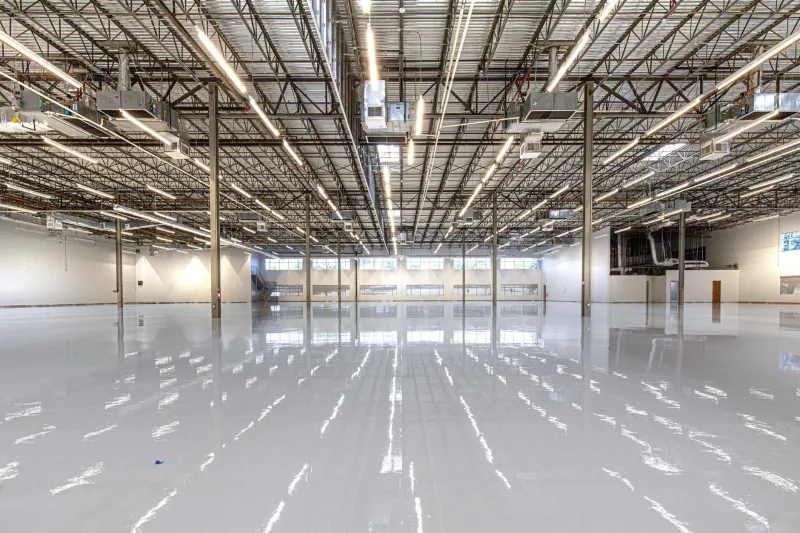
For epoxy flooring specifically, these dynamics are amplified by two factors unique to the medium. First, epoxy surfaces can be formulated in virtually any color with precise consistency across an entire floor plane—something carpet, tile, and polished concrete cannot always achieve. Second, the reflectivity of an epoxy finish affects how color is perceived under different lighting conditions, meaning the same hue can read differently in natural light versus fluorescent or LED environments. A skilled contractor accounts for both variables during the design consultation phase.
Retail Environments: Moving Customers Through Space
Consider a mid-sized specialty retailer on Tampa's South Howard Avenue corridor. The owner had long noticed that customers tended to cluster near the entrance and rarely moved toward the back of the store, where higher-margin products were displayed. After consulting with Premier Epoxy Tampa, the decision was made to install a warm charcoal epoxy field with a subtle amber metallic undertone that deepened gradually toward the rear of the space.
The result was not accidental. Warmer, slightly more saturated floor tones near the back of the store created a visual "pull" that encouraged customers to move deeper into the retail environment. Within three months, the owner reported a measurable increase in transactions involving back-of-store inventory. The floor had functionally redesigned traffic flow without altering a single fixture.
This principle—using color gradient and finish variation to guide movement—is increasingly common in Tampa retail applications. Lighter floors near entry zones signal openness and welcome. Deeper, richer tones in destination areas signal importance and reward exploration.
Fitness Studios: Energy Without Aggression
The fitness industry presents a specific challenge: clients need to feel energized, but an environment that is overstimulating can increase perceived exertion and reduce the likelihood of return visits. Too much red, for instance, can tip from motivating to anxiety-inducing within thirty minutes of sustained exposure.
Several Tampa fitness studios have resolved this tension through strategic epoxy color zoning. A strength training area might feature a high-gloss dark gray floor with subtle red flake accents—enough to stimulate without overwhelming. A yoga or recovery zone in the same facility might transition to a matte sage green or warm sand tone, physiologically cueing the body to shift from exertion to restoration.
The use of epoxy in these environments also carries a practical advantage: the flooring communicates cleanliness. In a post-pandemic fitness market, clients are acutely aware of sanitation. A seamless, non-porous epoxy surface in a cool neutral tone reinforces hygiene at a visual level before a single word about cleaning protocols is spoken.
Medical and Wellness Offices: Trust Through Tone
In clinical environments, the stakes of color selection are particularly high. Patient anxiety is a documented barrier to treatment compliance, and environmental design plays a meaningful role in either exacerbating or alleviating that anxiety.
Several Tampa medical offices—including dental practices and outpatient physical therapy clinics—have moved away from the institutional beige and white flooring that has historically dominated healthcare interiors. In their place, soft blue-gray and warm greige epoxy floors have been installed, often with a low-sheen finish that avoids the sterile glare associated with traditional clinical spaces.
The rationale is grounded in research. Blue-gray tones are consistently associated with trustworthiness and calm in environmental psychology literature. A muted finish reduces sensory stimulation in spaces where patients may already be managing elevated stress. Taken together, these choices signal competence and care before a provider speaks a single word.
One Tampa orthodontic practice reported that parents frequently commented on how "relaxed" the waiting area felt after a full interior renovation that included new epoxy flooring. The owners attributed a portion of their improved patient retention to the environmental redesign.
Design Principles Contractors Should Understand
For epoxy flooring contractors advising commercial clients, color psychology represents both an opportunity and a responsibility. The following principles form the foundation of a sound consultation:
Understand the business objective first. A color that works beautifully in a boutique clothing store may be entirely wrong for a quick-service restaurant where rapid table turnover is the goal. Warm, energizing tones encourage faster decision-making and shorter dwell times—ideal for high-volume food service, counterproductive for experiential retail.
Account for the full lighting environment. An epoxy color selected under a showroom's neutral lighting may read entirely differently under the cool fluorescent fixtures of a warehouse or the warm recessed lighting of a spa. Always evaluate color samples under the actual lighting conditions of the installation site.
Consider the brand's existing color language. The floor should not compete with the brand palette—it should extend it. A business whose logo and marketing materials lean heavily on navy and gold will benefit from an epoxy floor that either echoes or complements those tones, reinforcing brand coherence at every touchpoint.
Educate clients on finish and its psychological effect. High-gloss finishes increase perceived brightness and formality. Matte or satin finishes communicate approachability and warmth. The same color in two different finishes can produce meaningfully different emotional responses in the same customer.
The Floor as a Strategic Asset
The commercial epoxy installations Premier Epoxy Tampa completes are never merely functional. Every color decision, finish selection, and design detail carries communicative weight. When a business owner chooses the right epoxy floor—one aligned with their brand psychology, their customer base, and their operational goals—they are investing not just in a durable surface, but in a silent salesperson that works every hour the doors are open.
Tampa's business environment is competitive. The spaces that convert browsers into buyers, and first-time visitors into loyal clients, are increasingly those that understand design as strategy. The floor is where that strategy begins.