Cured vs. Dry: The Critical Distinction Tampa Floor Owners Keep Getting Wrong
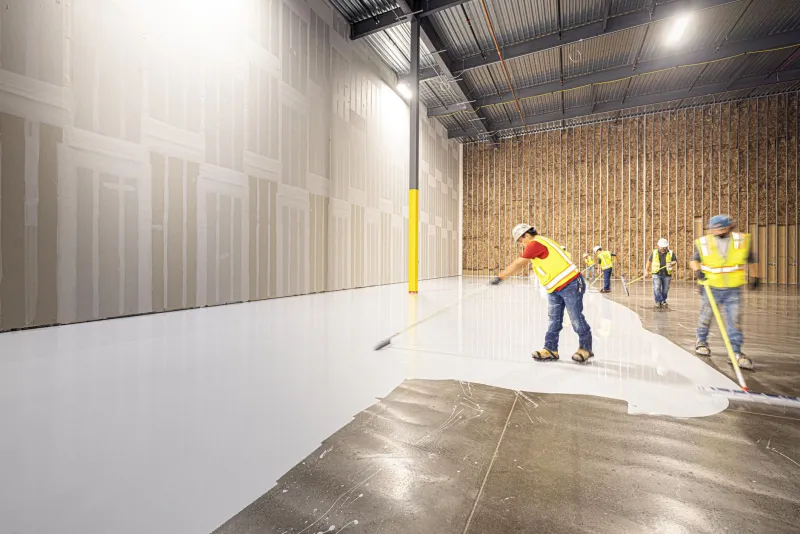
There is a moment in nearly every epoxy installation when a property owner walks across a freshly coated floor, runs a hand along the surface, and declares it ready. The coating is firm underfoot. It does not smear. It reflects light cleanly. By every visible measure, the job appears complete.
It is not.
What that owner is observing is surface dryness—a preliminary chemical state that precedes full cure by anywhere from 48 hours to several weeks, depending on environmental conditions, coating thickness, and product formulation. Confusing the two is one of the most common and costly mistakes made by Tampa business owners and homeowners alike, and it is a mistake that professional contractors like those at Premier Epoxy Tampa work deliberately to prevent.
What Is Actually Happening Beneath the Surface
Epoxy is not paint. It does not cure through evaporation the way a latex coating does. Instead, it undergoes a chemical reaction called cross-linking—a process in which the resin and hardener components bond at a molecular level to form a rigid, interconnected polymer matrix. This reaction begins the moment the two components are mixed and continues long after the surface has lost its tackiness.
The process unfolds in stages. Within the first several hours, the coating transitions from liquid to gel. Within 24 hours under typical conditions, it reaches what is commonly called a foot-traffic threshold—meaning light pedestrian use will not visibly damage the surface. Within 72 hours, most epoxy systems achieve sufficient hardness to tolerate moderate vehicle traffic. Full chemical cure, however, the state at which the coating has reached its maximum hardness, adhesion strength, and chemical resistance, typically requires five to seven days under controlled conditions. In some high-build or specialty formulations, that timeline extends further.
In Tampa's climate, where ambient humidity frequently exceeds 70 percent and summer temperatures routinely push into the upper 90s, those timelines can shift in ways that are not always predictable. Elevated humidity can interfere with the cross-linking reaction, introducing surface defects and reducing long-term bond strength. Extreme heat can accelerate surface cure while leaving subsurface layers incompletely reacted. A coating that appears ready may be performing at 60 percent of its intended capacity.
Why Contractors Insist on the Full Timeline
When a reputable Tampa epoxy contractor advises a client to wait 72 hours before vehicle traffic or five to seven days before chemical exposure, that guidance is not conservative caution—it is engineering. Introducing stress to an incompletely cured coating compresses the polymer matrix before it has fully stabilized, and the consequences are not always immediate.
A forklift driven across a floor at the 24-hour mark may leave no visible marks that day. Three months later, that same area may exhibit micro-fractures, delamination, or accelerated wear that is nearly impossible to trace back to its origin. The floor looks like a failure. The installation is blamed. In reality, the damage occurred in the first day of service.
Chemical exposure presents an even more acute risk. Epoxy's resistance to oils, solvents, cleaning agents, and industrial fluids is a function of its fully cured molecular structure. An incompletely cured coating is porous in ways that are invisible to the eye. A spill of hydraulic fluid or a commercial degreaser applied during the first 48 hours can penetrate the coating and begin degrading the bond at the substrate level—damage that may not surface visibly for months.
The Business Owner's Dilemma
For commercial clients, the cure timeline creates a real operational challenge. A restaurant that closes for a floor installation loses revenue every day the dining room remains out of service. A warehouse that cannot move inventory is not generating throughput. The pressure to return a space to service as quickly as possible is legitimate and understandable.
What experienced contractors at Premier Epoxy Tampa consistently observe, however, is that the cost of premature loading almost always exceeds the cost of the downtime it was intended to avoid. A floor that requires partial or full recoating within two years—because it was placed into heavy service before achieving full cure—represents not only the direct cost of the repair, but the operational disruption of a second closure, the reputational friction of a project that did not perform, and the loss of the warranty protection that proper cure compliance would have preserved.
The more productive approach is to plan the installation timeline around operational reality before the project begins, not after. Scheduling an epoxy installation at the start of a scheduled closure, over a holiday weekend, or during a historically slow operational period eliminates the conflict between cure time and business continuity.
Environmental Variables Tampa Owners Must Account For
Because Tampa's climate is genuinely distinct from the temperate conditions under which many coating specifications are developed, local property owners should be aware of several environmental factors that influence cure performance.
Temperature fluctuations: While daytime temperatures in Tampa are consistently warm, nighttime temperatures in winter months can drop into the 50s. Epoxy cross-linking slows significantly below 55 degrees Fahrenheit. A garage floor coated in late afternoon during a January installation may experience a dramatically extended cure window if overnight temperatures fall.
Humidity: High ambient moisture does not simply slow cure—it can actively interfere with it. Moisture vapor transmission from the concrete substrate is a well-documented source of epoxy failure in Florida, and a floor that is marginally acceptable for coating at low humidity may be problematic during the wet season.
Air circulation: Enclosed spaces with limited airflow trap the chemical off-gassing produced during cure and can create uneven reaction conditions across the floor surface. Adequate ventilation is not only a safety requirement during installation—it is a performance factor during cure.
What Proper Cure Compliance Looks Like in Practice
For residential clients, Premier Epoxy Tampa's standard guidance includes a minimum of 24 hours before foot traffic, 72 hours before vehicle entry into a coated garage, and a full seven days before parking a vehicle in a stationary position for extended periods. Heavy furniture should not be placed until the 72-hour threshold has passed, and area rugs should not be positioned on the floor for at least two weeks, as trapped moisture beneath an impermeable rug surface can affect the final cure.
For commercial clients, the specific timeline is determined by the coating system selected, the anticipated traffic type, and the substrate conditions documented during the pre-installation assessment. High-build systems and multi-layer applications require longer intervals between coats as well as longer post-completion cure windows before full-load service begins.
In both cases, the contractor's cure guidance is not a liability disclaimer—it is the last phase of the installation itself. Following it is as much a part of protecting the investment as the surface preparation and application that preceded it.
Patience as a Performance Strategy
The epoxy flooring industry has done a reasonably good job of communicating its aesthetic advantages. High-gloss finishes, decorative flake systems, and seamless surfaces are well understood by consumers. The chemistry that makes those surfaces durable, however, receives far less attention—and it is the chemistry that determines whether a floor looks the same in year ten as it did on installation day.
Full cure is not a waiting period. It is the final act of a coating system doing exactly what it was engineered to do. Allowing it to complete without interruption is the single most straightforward thing a property owner can do to protect the value of a professional epoxy installation.
For Tampa property owners planning an upcoming epoxy project, Premier Epoxy Tampa's team is available to provide guidance on installation scheduling, cure timelines, and the environmental considerations specific to the region. Reaching the finish line is only worthwhile if the floor is given the time to get there properly.